
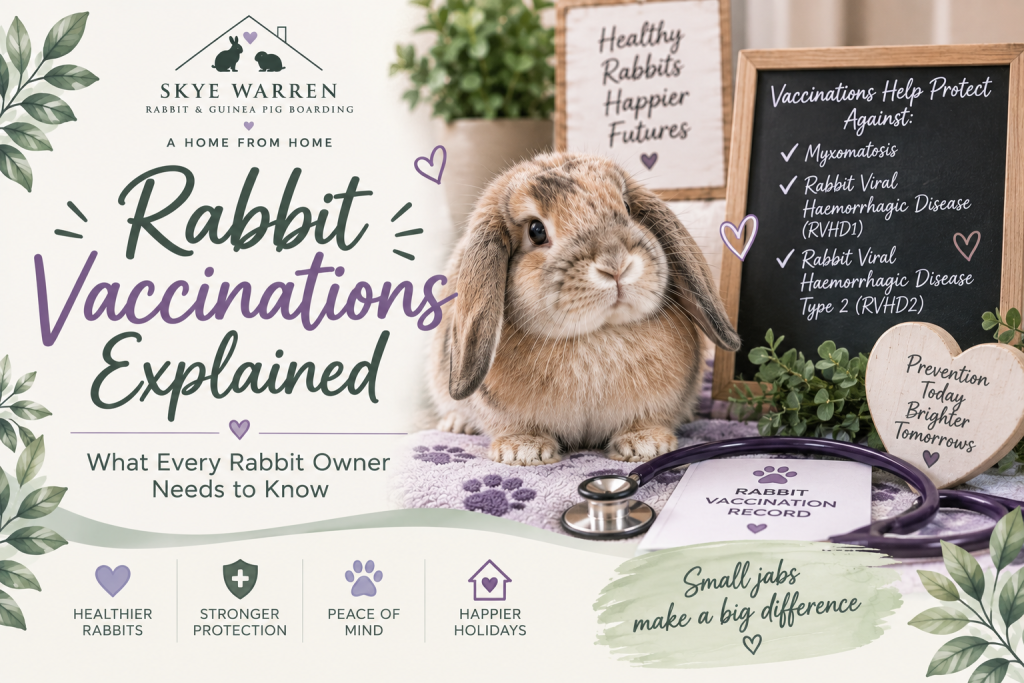
Note: Vaccination recommendations can change over time and may vary depending on your rabbit’s circumstances. Always speak to your vet for advice tailored to your rabbit.
When you welcome a rabbit into your family, you’ll quickly discover that keeping them healthy involves more than providing the right food, plenty of hay and a spacious home.
One of the most important ways to protect your rabbit is through vaccination.
Many owners are surprised to learn that even rabbits who never leave the garden—or those that live entirely indoors—can still be at risk from serious infectious diseases.
In this guide, we’ll explain why vaccinations matter, which diseases they’re designed to help protect against and why keeping your rabbit’s vaccinations up to date is such an important part of responsible rabbit ownership.
Why Do Rabbits Need Vaccinations?
Vaccinations help your rabbit’s immune system recognise and respond to certain infectious diseases.
While no vaccine can guarantee complete protection, vaccination significantly reduces the risk of severe illness and is widely recommended by rabbit-savvy vets.
Some rabbit diseases can spread extremely quickly and may affect healthy rabbits with very little warning.
That’s why prevention is always better than treatment.
Which Diseases Are Rabbits Vaccinated Against?
In the UK, rabbit vaccinations are commonly used to help protect against:
Myxomatosis
Myxomatosis is a serious viral disease that affects both wild and domestic rabbits.
It can be spread through:
- Biting insects such as fleas and mosquitoes
- Direct contact with infected rabbits
- Contaminated environments
The disease can cause:
- Swollen eyes and eyelids
- Discharge from the eyes and nose
- Swelling around the face
- Difficulty eating
- Lethargy
Vaccination provides important protection and is one of the best ways to reduce the risk.
Rabbit Viral Haemorrhagic Disease (RVHD)
Rabbit Viral Haemorrhagic Disease is another serious viral illness.
You may hear it referred to as:
- RHD
- RVHD
- Rabbit Haemorrhagic Disease
There are different strains, including RHD1 and RHD2, both of which can be extremely serious.
These viruses are particularly concerning because they can sometimes spread without obvious signs.
They may be carried on:
- Shoes
- Clothing
- Hay
- Equipment
- Insects
This is one reason indoor rabbits still need vaccination.
Do Indoor Rabbits Need Vaccinations?
This is one of the questions vets hear most often.
Many people assume indoor rabbits are completely protected because they never go outside.
Unfortunately, viruses don’t always stay outdoors.
Insects can enter the home, and viruses may be carried indoors on shoes, clothing or other items.
For this reason, vaccination is generally recommended even for rabbits that spend all their time indoors.
Your own vet is always the best person to advise on the right vaccination schedule for your rabbit.
When Should Rabbits Be Vaccinated?
The timing of vaccinations depends on several factors, including:
- Your rabbit’s age
- Previous vaccination history
- Your vet’s recommendations
- Local disease risks
Your veterinary practice will advise when your rabbit should receive their initial vaccination and any future booster vaccinations.
Keeping a record of vaccination dates can help ensure your rabbit stays protected.
Why Vaccinations Matter for Boarding
When rabbits from different households stay in the same boarding environment, protecting everyone’s health becomes even more important.
That’s why reputable rabbit boarding providers will ask to see proof of vaccination before confirming a booking.
At Skye Warren, we require proof that your rabbit’s vaccinations are up to date before their stay.
This helps us provide the safest possible environment for every guest.
If you’re preparing for your rabbit’s holiday, our guide Preparing Your Rabbit for Boarding: The Complete Checklist explains everything you’ll need before arrival.
What Else Helps Keep Rabbits Healthy?
Vaccinations are just one part of good rabbit care.
Other important areas include:
🌾 Unlimited quality hay
🥬 A balanced diet
🏡 Plenty of space to exercise
🧸 Daily enrichment
💧 Fresh water
🩺 Regular health checks
If you’d like to learn more about nutrition, our guide What Should Rabbits Eat? A Complete Guide to a Healthy Rabbit Diet explains exactly what rabbits need to stay healthy.
Keeping Vaccination Records Safe
Many owners find it helpful to:
- Photograph vaccination certificates.
- Keep paper copies somewhere safe.
- Make a note of future booster dates.
- Bring vaccination records whenever boarding is required.
Being organised can make holiday planning much easier.
Frequently Asked Questions
Can an indoor rabbit catch myxomatosis?
Indoor rabbits are generally at lower risk than outdoor rabbits, but they are not completely protected. Biting insects and other routes of transmission mean indoor rabbits may still be exposed.
Do vaccinations last forever?
No. Rabbits usually require booster vaccinations to maintain protection. Your vet will advise the most appropriate schedule.
Why do boarding providers ask for vaccination records?
Because it’s one of the most effective ways to help protect all rabbits staying at the facility.
My rabbit seems healthy. Do they still need vaccinations?
Healthy rabbits can still be exposed to infectious diseases. Vaccination is intended to reduce the risk of serious illness before exposure occurs.
Vaccination Myths
“My rabbit never goes outside.”
Indoor rabbits can still be exposed to diseases through insects or contaminated items brought into the home.
“Wild rabbits don’t get vaccinated.”
Wild rabbits also face significantly higher risks from infectious diseases. Vaccination is one of the advantages we can offer our pet rabbits.
“My rabbit had one vaccination years ago.”
Protection does not necessarily last for life. Speak to your vet about keeping your rabbit’s vaccinations up to date.
Final Thoughts
Vaccination is one of the simplest and most effective ways to help protect your rabbit from some of the most serious infectious diseases found in the UK.
Combined with a healthy diet, plenty of exercise, enrichment and regular veterinary care, it forms an important part of responsible rabbit ownership.
At Skye Warren, your rabbit’s wellbeing is always our priority. By requiring up-to-date vaccinations for boarding guests, we’re helping to create a safer environment for every rabbit in our care.
Whether your rabbit is staying with us for a few days or you’re simply looking for trusted advice, we’re here to support you in giving your bunny the happiest and healthiest life possible.
Further Reading:
Planning Your Stay — where you explain vaccination requirements